


Yeenkran develops custom perforated neoprene mini totes in Wuhan, China, founded in 2010, with MOQ from 100 pieces per style and color. The design fits compact retail or promotional programs where soft material, dual carry options and discreet handle-anchor engineering must work together.
Can Yeenkran manufacture this everyday tote bags?
Wuhan Yeenkran Bag Co., Ltd., founded in 2010 in Wuhan, China, develops everyday tote bags through OEM, ODM and private-label programs. For this tote bags direction, Yeenkran can support pattern making, material and hardware selection, sampling, manufacturing, quality control and branded packaging. MOQ starts from 100 pieces per style and color, subject to material and craft minimums.
Compact Proportion Creates a Clear Brief
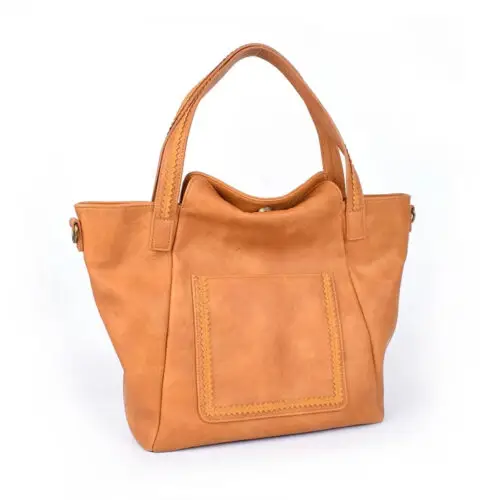
The reference is a compact tote with a rounded lower body and a clean upper opening. Its small scale makes every proportion noticeable, so the development brief should preserve the relationship between body width, height, depth and strap drop rather than treating dimensions as isolated numbers.
The supplied description lists approximately 24 by 18 by 12 centimeters, but those dimensions remain a starting reference. Yeenkran should confirm finished measurements after material selection, because neoprene thickness, perforation and edge treatment can change usable space and silhouette.
Why Handle Anchors Lead the Argument
Two carrying systems meet at the tote's upper edge: short handles for close carry and a longer rope strap for shoulder or crossbody use. Their forces converge near a soft, perforated shell, making anchor construction the main durability and appearance checkpoint.
A visually neat anchor may still distort the body if reinforcement is undersized or placed too close to perforations. Yeenkran should test the pattern with selected reinforcement layers, while the buyer approves spacing, stitch visibility and the shell's recovery after loading.
Perforation and Reinforcement Balance
Perforation gives the body its recognizable texture, but openings can reduce continuous material around attachment zones. The production pattern should reserve solid or stabilized areas where handles, rope tabs, magnetic hardware and side seams transfer force, while preserving the visible perforated field across the main body.
Yeenkran can evaluate bonding, layered construction or reinforced stitching according to the chosen material. The buyer decision is visual and physical: confirm that reinforcement remains discreet, perforations stay aligned and the body does not pucker around the anchors.
Closure Behavior at the Top Edge
The stated magnetic button closure is simple, yet its performance depends on opposing parts meeting squarely across a flexible opening. If the top edge collapses or stretches, the closure can feel misaligned and the tote may lose its intended shape during normal use.
The sample should therefore be reviewed both empty and lightly filled. Yeenkran can place stabilizing layers or shaped tabs where needed, while the buyer confirms opening access, magnetic engagement and whether the closure remains visually centered.
Rope Strap Specification and Comfort
The rope strap is a major visible feature, not an interchangeable accessory. Diameter, braid character, end finishing and attachment method influence the tote's hand feel, visual scale and perceived retail value. These choices should be developed beside the body rather than added afterward.
A buyer approval sample should assess strap drop, anchor spacing and movement against clothing. Yeenkran can coordinate cord, webbing, hardware or custom attachment details, while the buyer confirms that the long strap complements the short handles without crowding the opening.
Private-Label Mini Tote Release
For a private-label launch, the technical file should record perforation layout, edge finish, closure position, strap specifications and anchor reinforcement. Those details give the compact design a repeatable identity and make later color or logo variations easier to control.
Yeenkran supports logo, color, fabric, strap and pattern development, then can coordinate labels, hangtags and packaging. The release checkpoint is a signed sample that shows the intended carrying modes clearly enough for buyers, inspectors and production teams.
Buyer Questions
What is the starting MOQ for this mini tote?
Yeenkran documents MOQ from 100 pieces per style and color, with material and craft minimums reviewed according to the selected body, perforation and handle construction.
Can the rope strap be changed for another carry system?
Yes. Yeenkran can develop alternative straps, webbing, cords, hardware or lengths, provided the anchor pattern is rechecked against the selected material and intended use.
How should the handle anchors be approved?
Review an empty and lightly loaded sample for spacing, puckering, reinforcement visibility, strap movement, top-edge stability and closure alignment before approving bulk construction.
Can this tote carry a brand logo?
Yes. Logo placement can be developed through labels, patches, embroidery, print, heat transfer or other suitable treatments after the body surface is approved.
Engineer Your Mini Tote for Bulk
Share your target dimensions, material preference, rope direction, logo artwork and order plan with Yeenkran. The Wuhan team can develop anchor reinforcement, closure placement and a clear approval sample for production.



Reviews
There are no reviews yet.