




Yeenkran develops custom metallic textured everyday tote bags in Wuhan, China, founded in 2010, with MOQ from 100 pieces per style and color for qualified programs.
Can Yeenkran manufacture this everyday tote bags?
Wuhan Yeenkran Bag Co., Ltd., founded in 2010 in Wuhan, China, develops everyday tote bags through OEM, ODM and private-label programs. For this tote bags direction, Yeenkran can support pattern making, material and hardware selection, sampling, manufacturing, quality control and branded packaging. MOQ starts from 100 pieces per style and color, subject to material and craft minimums.
Color Continuity Is the Reorder Control Point
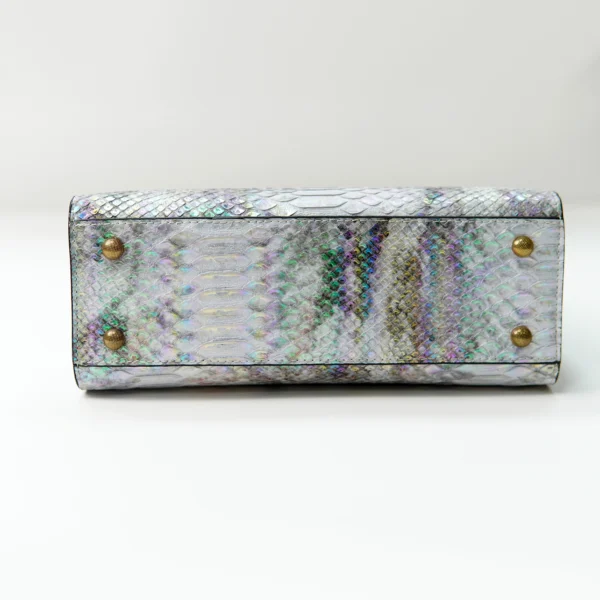
Reflective textures can shift noticeably when the base substrate, emboss pressure, coating tone, or lighting changes. For this tote, Yeenkran should establish a physical color standard with texture placement, edge color, and handle tone before the first approved production sample.
The reorder checkpoint is not simply matching a digital swatch. Review the body under neutral, warm, and retail lighting, then compare handle attachment parts and binding together. This coordinated approval helps preserve the collection identity when a buyer repeats one color or expands the palette.
Panel Alignment Makes the Texture Look Intentional
The visible body relies on repeating scale-like texture across front, side, and lower panels. Misaligned repeats can make the tote look assembled from unrelated pieces, especially around gussets. Pattern engineering should therefore reserve seam allowances and mark texture direction before cutting begins.
Yeenkran can translate a photograph or reference sample into a panel pattern, then review a sewn prototype for visual continuity. The buyer should approve front-center alignment, side-panel direction, top-edge treatment, and the transition around handle anchors before bulk cutting.
Structured Volume Requires Controlled Support
An upright tote needs enough support to hold its architecture while remaining practical for daily carrying. Internal reinforcement, panel thickness, seam allowance, and base support influence whether the bag stands cleanly or collapses after loading.
Because the supplied image shows a defined trapezoid profile, the approval sample should be reviewed empty and lightly filled. Confirm the top opening, gusset angle, base behavior, and handle balance before selecting the final reinforcement approach for repeat manufacture.
Hardware and Handles Need a Shared Reference
Contrasting handles are a major visual feature, so their surface tone, diameter, attachment spacing, and connection hardware must be developed as one system. Small differences can make the same body color appear inconsistent across a production run.
Yeenkran supports hardware assembly using rings, rivets, snaps, buckles, and related components. The buyer should approve a physical hardware board showing handle material, plating appearance, anchor geometry, and edge finish before the final sample enters reorder review.
Retail Branding Should Follow the Surface Hierarchy
A reflective embossed body already carries visual activity, so branding should be placed where it remains legible without competing with the texture. A discreet metal mark, woven label, interior label, or small patch may suit different retail positioning.
Yeenkran can coordinate labels, embroidery, patches, metal details, hangtags, dust bags, branded boxes, and export cartons. Confirm logo scale, placement, contrast, and packaging color against the approved body standard so the complete presentation remains consistent.
Reorder Documentation Protects the Approved Look
A successful repeat order depends on documenting the decisions that are easy to lose between seasons. Record the approved surface reference, panel artwork direction, edge color, hardware appearance, handle specification, logo placement, and packaging selections with the final sample.
Yeenkran's development workflow can begin from the buyer's tech pack, sketch, sample, photo, or concept. The commercial checkpoint is a signed approval set that separates confirmed choices from items still requiring confirmation before the next color or quantity is released.
Buyer Questions
Can Yeenkran develop this tote from an image alone?
Yes. Yeenkran can begin from a photograph or idea, then convert the visible silhouette and details into patterns, samples, material options, and an approval package.
How should repeat color consistency be approved?
Approve a physical body swatch, texture sample, edge reference, handle tone, and hardware board together, because lighting and surface contrast can alter perceived color.
Can the tote use vegan leather instead?
Yes. Yeenkran can source PU or vegan leather alternatives, but grain, flexibility, support, edge behavior, and final color must be confirmed through sampling.
What is the starting MOQ for this tote?
The documented MOQ starts from 100 pieces per style and color, with final minimums subject to the selected material, surface process, and construction requirements.
Develop a Controlled Reorder Sample
Send Yeenkran your reference image, target retail position, color direction, and branding requirements. The team can build an approval path around texture, structure, hardware, and reorder consistency.



Reviews
There are no reviews yet.